Every year, thousands of people turn the dream of flying into reality by earning their private pilot license (PPL). Whether you want to fly for fun, travel on your own schedule, or take the first step toward a professional aviation career, a PPL is your ticket to the sky.
This guide breaks down every step of the process so you know exactly what to expect in 2026.
Why Become a Private Pilot
Flying is one of the most rewarding skills you can learn. A private pilot license gives you the freedom to fly yourself and passengers anywhere in the country under visual flight rules. Weekend trips that used to take six hours by car become one-hour flights. Remote destinations become accessible. And for many pilots, the cockpit becomes a place of focus and clarity that nothing else can match.
Aviation is also more accessible than most people think. You can start training at 16, solo at 16, and earn your certificate at 17. There is no upper age limit. If you can pass a medical exam and meet the training requirements, you can become a pilot.
Step 1: Get Your FAA Medical Certificate
Before you start flying, you need an FAA medical certificate. For private pilots, a Third Class medical is required. You will visit an Aviation Medical Examiner (AME), who performs a physical exam covering vision, hearing, cardiovascular health, and general fitness.
The exam costs between $100 and $200 depending on your location. Most healthy adults pass without issues. If you have a medical condition that might be disqualifying, consider scheduling a consultation with an AME before your formal exam to understand your options.
Third Class medicals are valid for 60 months if you are under 40 and 24 months if you are 40 or older. You can find an AME near you through the FAA's online directory.
Step 2: Choose Your Flight Training Path
There are two main training paths: Part 61 and Part 141. Part 61 offers more flexibility in scheduling and allows you to train at your own pace. Part 141 programs follow a structured, FAA-approved syllabus and may allow you to earn your certificate with fewer total flight hours.
When choosing a flight school, look at instructor availability, aircraft condition, scheduling flexibility, and student pass rates. Talk to current students if you can. The right school makes a huge difference in how quickly and confidently you complete your training.
If you are balancing training with a full-time job or school, Part 61 is often the better fit. If you want a fast, immersive experience, a Part 141 program can get you through training more efficiently.
Step 3: Pass the FAA Written Knowledge Test
The Private Pilot Knowledge Test (PAR) is a 60-question, multiple-choice exam administered at PSI testing centers. You need a 70% or higher to pass. The test covers aerodynamics, weather, navigation, regulations, aircraft systems, and flight operations.
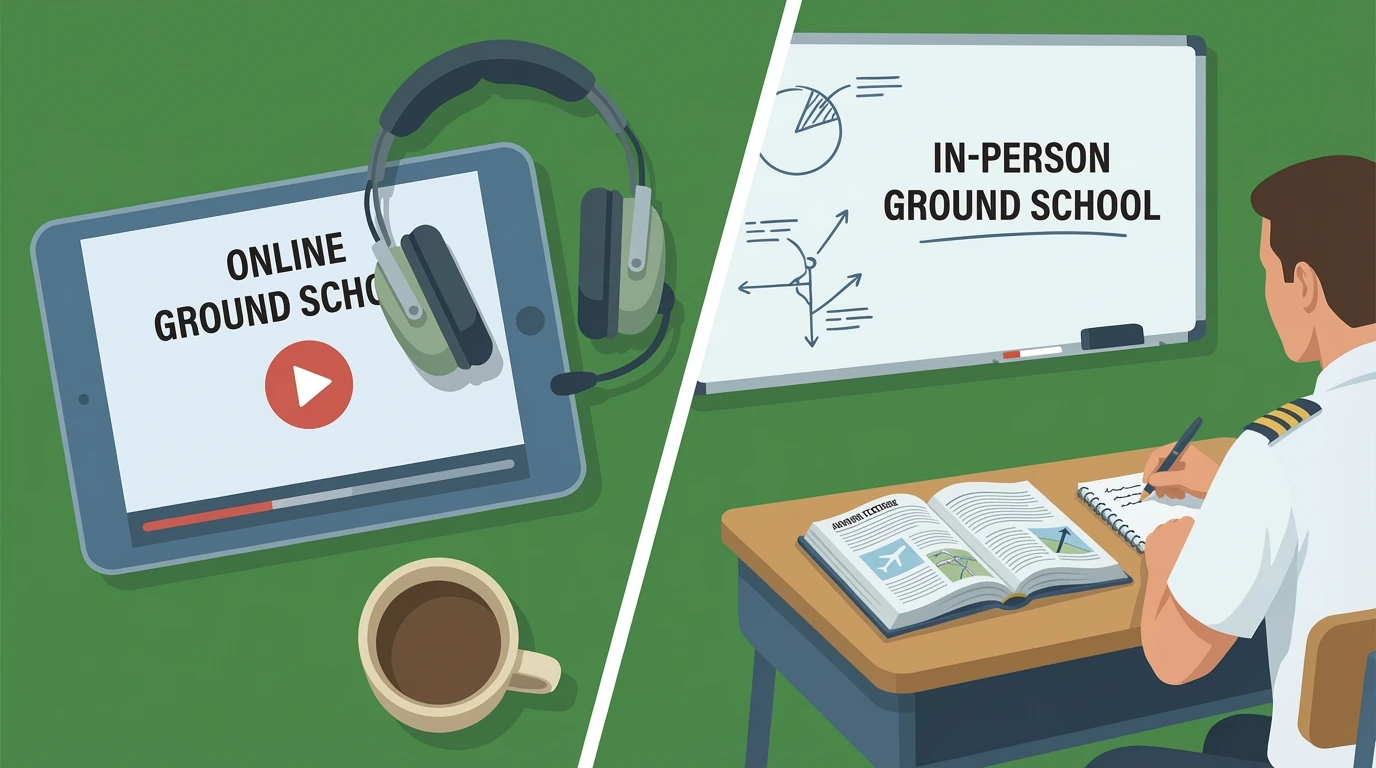
This is where quality ground school matters. A strong ground school program gives you the knowledge foundation for both the written test and real-world flying. AviatorPro's Private Pilot Ground School covers every topic on the FAA exam with 30+ hours of structured content. Over 2,500 students have enrolled, and graduates consistently achieve a 99.7% pass rate on their first attempt.
AviatorPro also includes access to AviatorIntel, an AI-powered study assistant that answers your aviation questions instantly. Instead of waiting for office hours or searching through forums, you get accurate, FAA-aligned answers on demand.
Step 4: Build Your Flight Hours
The FAA requires a minimum of 40 hours of flight time for a private pilot certificate under Part 61, including 20 hours of dual instruction and 10 hours of solo flight. Under Part 141, the minimum drops to 35 hours.
In practice, the national average is closer to 60 to 75 hours before a student is ready for their checkride. Your total depends on how frequently you fly, the complexity of your local airspace, and how well you prepare between lessons.
Consistency is everything during flight training. Long gaps between lessons mean you spend time re-learning what you already covered. Two to three flights per week is the sweet spot for most students. Chair flying, using flight simulators at home, and studying between lessons all help you progress faster and retain more from each flight.
Step 5: Prepare for Your Checkride
The checkride is your final exam and consists of two parts: an oral exam and a practical flight test. A Designated Pilot Examiner (DPE) will evaluate your knowledge and flying skills against the Airman Certification Standards (ACS).
During the oral portion, expect questions about weather, airspace, aircraft systems, regulations, and your planned cross-country flight. The DPE wants to see that you can make sound aeronautical decisions, not just recite facts.
The flight portion covers takeoffs, landings, navigation, emergency procedures, and basic maneuvers like steep turns and stalls. Common reasons students fail include poor preparation for the oral exam, rushing through the pre-flight inspection, and struggling with crosswind landings. Practice these areas thoroughly before your checkride date.
Why Ground School Preparation Changes Everything in the Cockpit
The biggest factor in how quickly you earn your PPL is how prepared you are before each flight lesson. Students who understand aerodynamics, weather, and aircraft systems before they climb into the airplane spend their flight time building skills instead of learning concepts from scratch.
Think about it this way. If your instructor has to explain how the airspace system works while you are flying through it, that is time you could have spent practicing steep turns or perfecting your pattern work. When you already know the theory, your instructor can focus on making you a better pilot.
This is exactly what strong ground school delivers. AviatorPro graduates report needing up to 40% less flight instruction than the national average because they show up to every lesson ready to fly, not ready to learn what they should have studied on the ground.
Ground knowledge also builds real confidence in the cockpit. When you understand why the airplane behaves the way it does in a stall, you stay calm and recover smoothly. When you can read a METAR and interpret a weather briefing, you make better go/no-go decisions. The knowledge is not just for passing a test. It is what separates a nervous student from a confident pilot.
Your Next Step
Getting your private pilot license is one of the most challenging and rewarding things you will ever do. The key is to start with a strong knowledge foundation so every hour in the airplane counts.
AviatorPro's Private Pilot Ground School gives you everything you need to pass your FAA written exam and show up to every flight lesson prepared. With 30+ hours of content, a 99.7% first-time pass rate, and the AviatorIntel AI study assistant, you will be ready to fly with confidence.
And your PPL is just the beginning. AviatorPro also offers ground school courses for Instrument Rating and Commercial Pilot, so you can continue building your skills and ratings all in one place. Start your training today at learn.aviatorpro.com.